Live-Action TV
Beschreibung
Eikichi Onizuka is a twenty-two-year-old former biker gang leader, a man of crude ambitions and incredible physical strength who has decided his path in life is to become the greatest high school teacher in Japan. Despite his lack of credentials and his questionable morals, his goal is not just to educate but to live the life he never had, often fantasizing about the young female students he might encounter. After a chance encounter where he publicly humiliates a vice principal for calling students trash, Onizuka is secretly offered a position at the prestigious yet troubled Holy Forest Academy (Seirin Academy) by the school's wily director, who sees his unorthodox potential.
The setting is a wealthy private academy where the faculty is rigid and the students of Class 2-4 (or 3-4 in some versions) are notorious for psychological warfare. This specific class has driven several previous teachers to quitting or, in one case, to a nervous breakdown. Upon arriving, Onizuka is assigned to tame this class while living in a storage room on campus, a condition set by the sneering Vice Principal Uchiyamada, who becomes Onizuka’s primary antagonist. The narrative follows Onizuka as he confronts a series of escalating crises, from student blackmail and suicide attempts to cyberbullying and parental neglect.
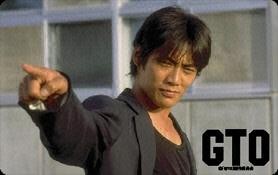
The 1998 adaptation, starring Takashi Sorimachi, became a massive cultural phenomenon in Japan. It begins with Onizuka washing windows before his chaotic interview at the school. The central conflict ignites immediately when he discovers that the seemingly perfect students are master manipulators. In the first episode, a student named Nanako Mizuki attempts to entrap Onizuka by staging a scandal, taking compromising photos of him in his apartment to get him fired. Rather than expelling her, Onizuka saves her from a dangerous situation involving yakuza and famously uses a sledgehammer to smash a hole in her parents’ house, physically breaking down the emotional walls separating her divorced family. This pattern becomes the show's engine: the students throw their worst at Onizuka, only for him to absorb the blow and respond with extreme, often illegal or dangerous, acts of loyalty that expose the hypocrisy of the adults around them.
Throughout the twelve episodes of the 1998 series, Onizuka deals with a wide range of teenage issues. He helps a bullied computer genius who is cutting class, confronts a student who is secretly working as a compensated dating (enjo kōsai) provider, and faces off against a stalker teacher. A significant supporting character is Azusa Fuyutsuki, a young and initially timid teacher who serves as the traditional foil to Onizuka’s chaos. While she is horrified by his methods, she gradually learns to trust his instincts, eventually becoming his ally and love interest. Onizuka’s former gang friends, particularly Ryuji Saejima, provide comic relief and backup, often helping him stage elaborate stunts or rescue students from physical harm.
A second live-action adaptation premiered in 2012, starring Akira as a younger, more toned-down version of Onizuka. While the core premise remains the same, this version features significant changes to the setting and side characters. The school is renamed Meishu Academy, and the structure of the faculty differs. Fuyutsuki is demoted to Onizuka’s teaching assistant rather than an equal colleague, and the school director plays a more active role in approving Onizuka’s antics. The first episode follows a similar arc involving a student named Anko Uehara, who blackmails Onizuka, and a suicidal boy named Noboru. However, the 2012 series updates the technology, adds more modern special effects, and leans heavily into a brighter, more stylized aesthetic. The narrative arcs cover similar ground, including helping a shut-in student who has trashed her apartment and dealing with a classmate's history of driving a previous teacher to suicide. This adaptation also produced multiple follow-up specials and a second season set in 2014, though it received a more mixed reception compared to the legendary status of the 1998 version.
Ultimately, both adaptations follow the journey of a man who refuses to give up on children that society has labeled as lost causes. Whether he is dangling a student off a roof to prove a point or beating up a gang to save a child from their own parents, Onizuka’s philosophy remains constant: a teacher must be willing to sacrifice everything for the student, even if the student hates them for it. The climax of the 1998 series typically involves Onizuka facing expulsion after a major school scandal or physical injury, forcing the students he saved to finally stand up for him against the corrupt school board and their own parents.
The setting is a wealthy private academy where the faculty is rigid and the students of Class 2-4 (or 3-4 in some versions) are notorious for psychological warfare. This specific class has driven several previous teachers to quitting or, in one case, to a nervous breakdown. Upon arriving, Onizuka is assigned to tame this class while living in a storage room on campus, a condition set by the sneering Vice Principal Uchiyamada, who becomes Onizuka’s primary antagonist. The narrative follows Onizuka as he confronts a series of escalating crises, from student blackmail and suicide attempts to cyberbullying and parental neglect.
The 1998 adaptation, starring Takashi Sorimachi, became a massive cultural phenomenon in Japan. It begins with Onizuka washing windows before his chaotic interview at the school. The central conflict ignites immediately when he discovers that the seemingly perfect students are master manipulators. In the first episode, a student named Nanako Mizuki attempts to entrap Onizuka by staging a scandal, taking compromising photos of him in his apartment to get him fired. Rather than expelling her, Onizuka saves her from a dangerous situation involving yakuza and famously uses a sledgehammer to smash a hole in her parents’ house, physically breaking down the emotional walls separating her divorced family. This pattern becomes the show's engine: the students throw their worst at Onizuka, only for him to absorb the blow and respond with extreme, often illegal or dangerous, acts of loyalty that expose the hypocrisy of the adults around them.
Throughout the twelve episodes of the 1998 series, Onizuka deals with a wide range of teenage issues. He helps a bullied computer genius who is cutting class, confronts a student who is secretly working as a compensated dating (enjo kōsai) provider, and faces off against a stalker teacher. A significant supporting character is Azusa Fuyutsuki, a young and initially timid teacher who serves as the traditional foil to Onizuka’s chaos. While she is horrified by his methods, she gradually learns to trust his instincts, eventually becoming his ally and love interest. Onizuka’s former gang friends, particularly Ryuji Saejima, provide comic relief and backup, often helping him stage elaborate stunts or rescue students from physical harm.
A second live-action adaptation premiered in 2012, starring Akira as a younger, more toned-down version of Onizuka. While the core premise remains the same, this version features significant changes to the setting and side characters. The school is renamed Meishu Academy, and the structure of the faculty differs. Fuyutsuki is demoted to Onizuka’s teaching assistant rather than an equal colleague, and the school director plays a more active role in approving Onizuka’s antics. The first episode follows a similar arc involving a student named Anko Uehara, who blackmails Onizuka, and a suicidal boy named Noboru. However, the 2012 series updates the technology, adds more modern special effects, and leans heavily into a brighter, more stylized aesthetic. The narrative arcs cover similar ground, including helping a shut-in student who has trashed her apartment and dealing with a classmate's history of driving a previous teacher to suicide. This adaptation also produced multiple follow-up specials and a second season set in 2014, though it received a more mixed reception compared to the legendary status of the 1998 version.
Ultimately, both adaptations follow the journey of a man who refuses to give up on children that society has labeled as lost causes. Whether he is dangling a student off a roof to prove a point or beating up a gang to save a child from their own parents, Onizuka’s philosophy remains constant: a teacher must be willing to sacrifice everything for the student, even if the student hates them for it. The climax of the 1998 series typically involves Onizuka facing expulsion after a major school scandal or physical injury, forcing the students he saved to finally stand up for him against the corrupt school board and their own parents.
Besetzung
- Kirari
- Yoshito Kikuchi
- Shinichi TohgoAtsushi Harada
- Ryuji Saejima
- Yumi Shirakawa
- Kenji YoudaHidenori Tokuyama
- Tomoko NomuraMiki Kuroda
- Reiko Aizawa
- NakamataYoshimasa Kondo
- Masaru Watanabe
Kommentar(e)
Mitarbeiter
- RegisseurMasayuki Suzuki
- MusikTakayuki Hattori
- Künstlerischer LeiterKatsumi Nakazawa
- EditingTakuya Taguchi
- Recording engineerOsamu Onodera
- Theme Song CompositionShinjiro Inoue
- Theme Song PerformanceTakashi Sorimachi
- DrehbuchMitsuru Tanabe
- Original Manga
- KameraführungTakeshi Hamada
- Production managerMasamitsu Washizu
- Theme Song ArrangementKen Yoshida
- Theme Song LyricsTakashi Sorimachi
Produktion
- ProduktionKodanshaFuji Television NetworkKansai Telecasting CorporationAVEC
- Music ProductionFuji Pacific Music PublishingMercury Music Entertainment
- BroadcasterFuji Television NetworkKansai Telecasting CorporationGMA Network
Relationen
Anime-Übersicht

Manga-Übersicht